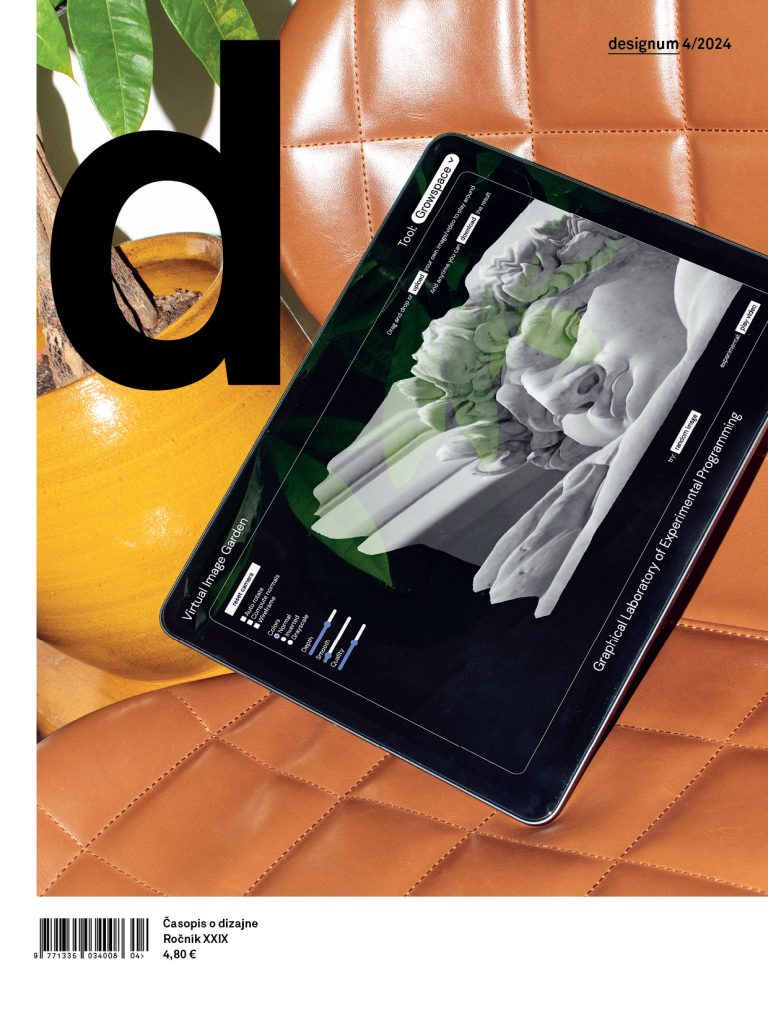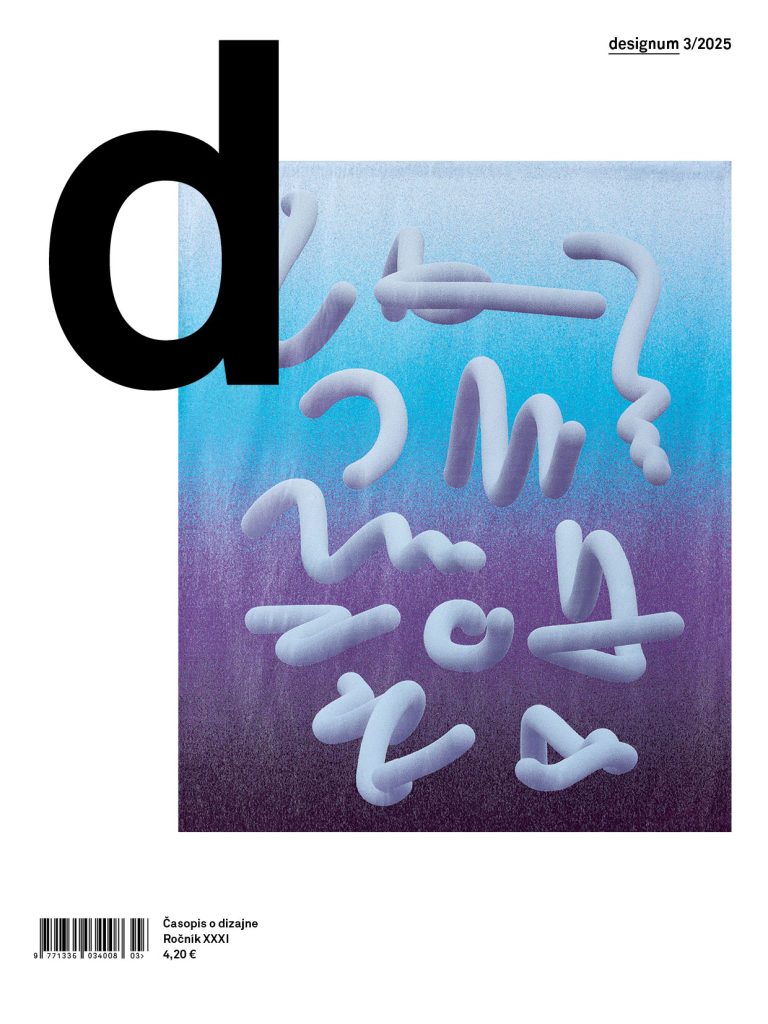
Designum 3/2025
If we thought that artists and designers would remain resistant to artificial intelligence (AI), which is advancing year by year and gradually penetrating all areas of life, that is not the case. Empirically, we are confronted with both its positive and negative aspects, with one often outweighing the other. On the one hand, we are reminded of its usefulness, for example in medical fields, but on the other, of its consequences concerning a new era of global inequality or the diminishing capacity for critical thinking. According to many current findings, we should not fully trust AI. The familiar saying applies here too: trust, but verify. Artists are understandably concerned as well, seeing in AI a potential for the misuse of their work as intellectual property. At the same time, this opens up new perspectives for the creative industry and for creative thinking, which are becoming valuable assets on the labor market.
So how should we approach these new technologies that tempt designers to use them in their creative process?
This question is partially addressed in interviews by Dávid Gabera with graphic designer Lucia Mišeková and textile designer Zuzana Zmateková. Both, each from the perspective of their own field and process preferences, connect analog approaches in their work with digital ones. In the section Current, we have also included an article by Ingrid Ondrejičková Soboslayová, who reflects on Jozef Bajus’s recent exhibition Everything Remains at the G149 Gallery in Bratislava through a kind of interspace between art and design, as well as through the lens of discursive practice.
Two other contributions focus on reflections of international biennials. Zdeno Kolesár turned his attention to the 13th International Design Biennial in Saint-Étienne, which in its current edition reflects a return to the roots: giving space to the École supérieure d’art et design (ÉSAD) in Saint-Étienne, to international creativity, and emphasizing design for all. In contrast to this established biennial, the Biennale of the Sun, whose second edition took place at the Musée cantonal de design et d’arts appliqués contemporains (MUDAC) in Lausanne, Switzerland, is aimed more at designers and the general public interested in specific, experimental, and future-oriented projects. Jozef Eduard Masarik shares insights on the themes of the sun and solar energy in design.
In the section Museally, you can read an article dedicated to Stanislav Koreň, who celebrates his ninetieth birthday this year. In addition to utilitarian wooden objects, the article’s author, Sabina Jankovičová, focuses on his interior works for spa facilities, hospitals, social spaces, and wedding halls.
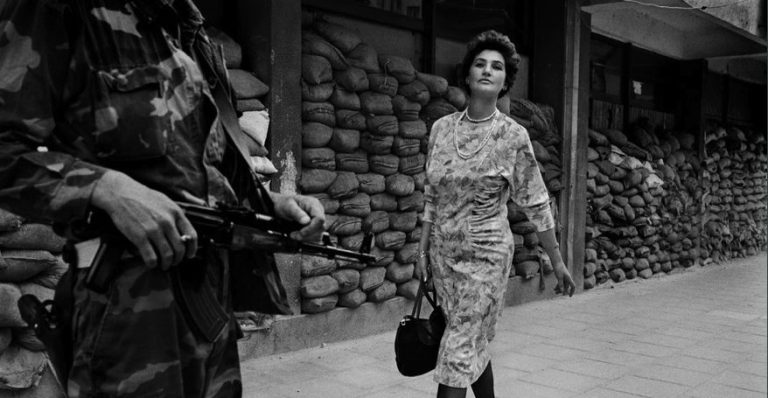
Irfan Hošić, a Bosnian art historian, was invited by the Academy of Fine Arts and Design to give a lecture on design and art in war-besieged Sarajevo during the 1990s. The editorial team asked him to transform this topic—marking the 30th anniversary of the Srebrenica genocide—into an article for Designum readers.
Viera Kleinová, following her previous article on Jozef Sušienka, focuses in this issue on another ceramic artist—Juraj Martha—evaluating his sculptural and design practice within architecture and public space.
We commemorate Professor Ľubomír Longauer, who passed away on September 6, 2025, with an obituary. On behalf of the Slovak Design Center, he was bid farewell by its director, Maroš Schmidt. More about Ľubomír Longauer’s work, mission, and legacy will be featured in the next issue.
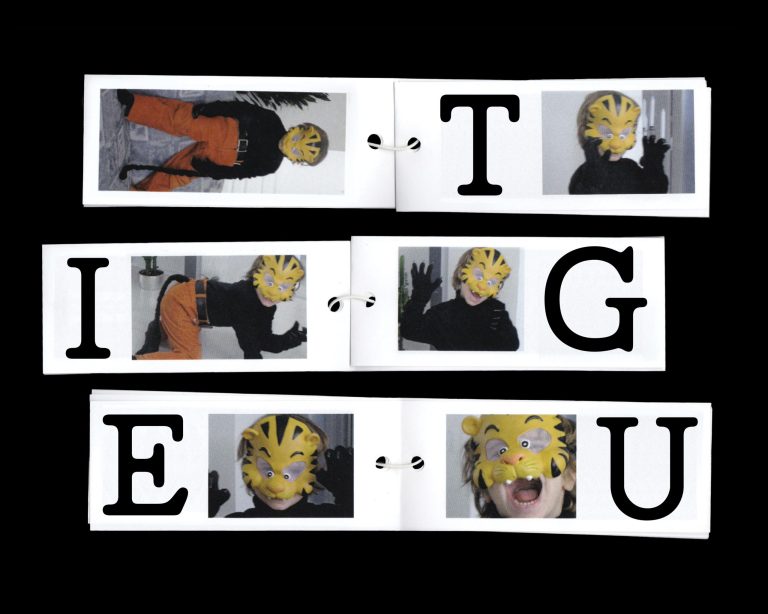
In the Typography section, you can explore the practical use of the Tigeu and Gryda typefaces by Ema Kern, a student at the Academy of Fine Arts and Design, under the supervision of Michal Tornyai.
Ďalšie vydania Designum
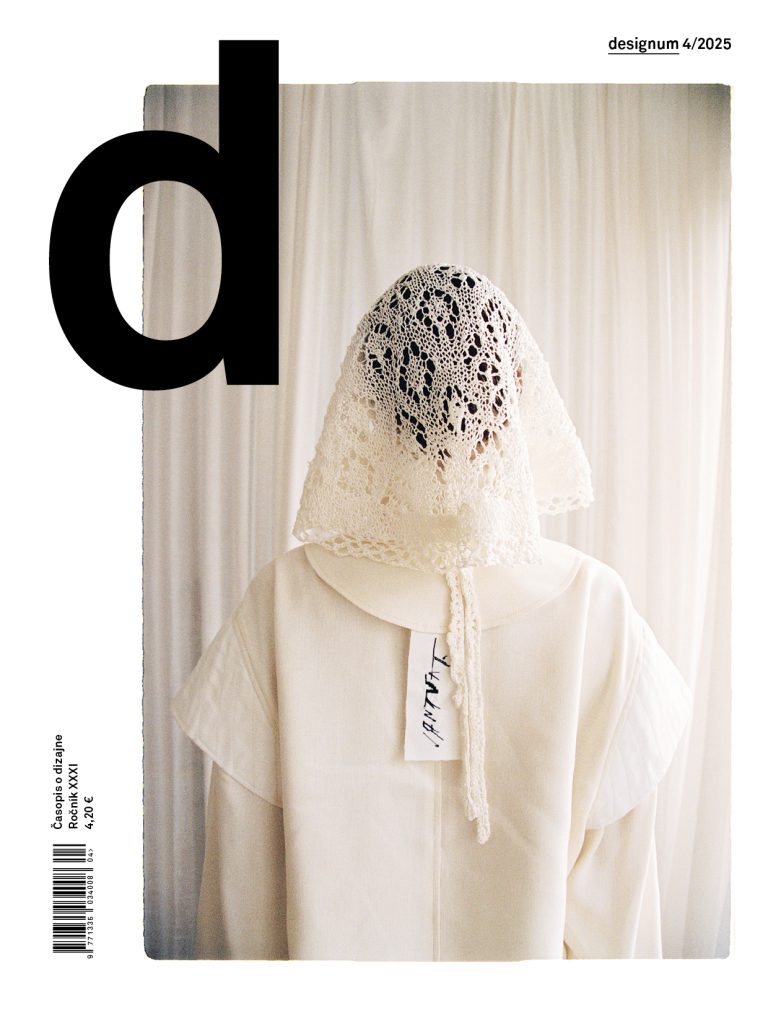
Designum 4/2025

Designum 2/2025
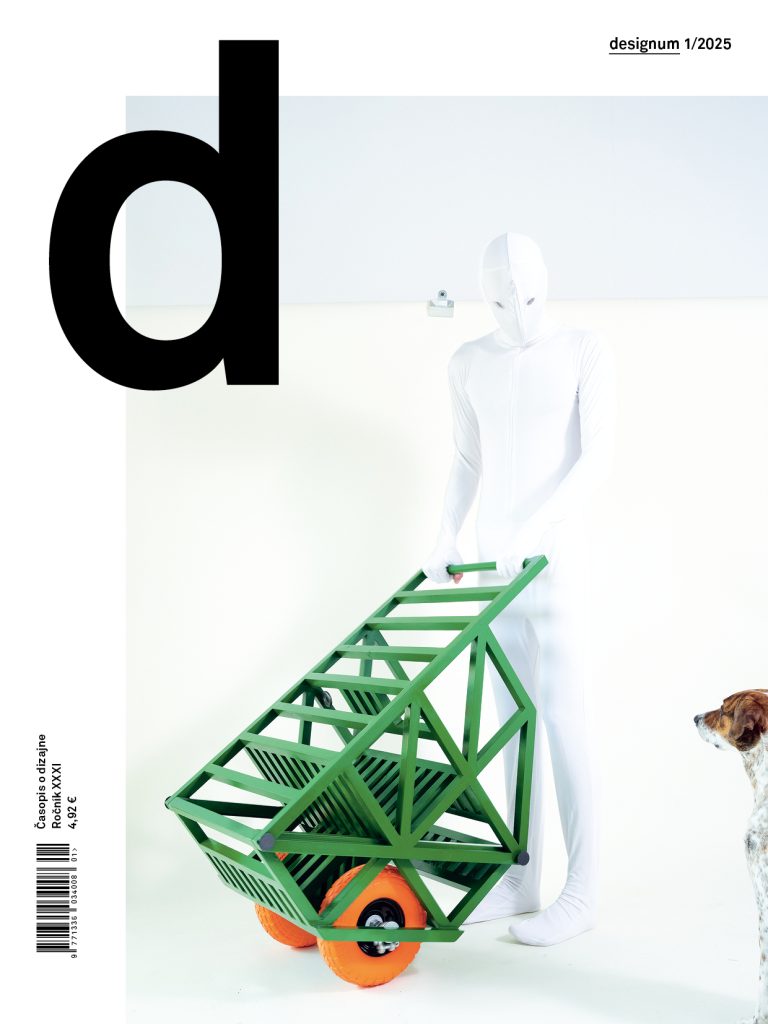
Designum 1/2025