Destabilising Narratives. Interview with Noam Toran

Noam Toran is a creator of worlds through which he explores how stories, myths, memories and other fictions influence the collective consciousness. He completed the Design Interactions study program, which represents an important point in the history of speculative design. He brings this experience into dialogue with decolonial thinking. Currently, his professional life is divided between the Netherlands and Switzerland, where he works as a teacher at the Geneva Haute école d’art et de design (HEAD) and the Zurich University of the Arts (ZHdK), as well as at the Dutch Design Academy Eindhoven. In the interview, he reveals more about his origins, attitudes and plans for the near future.
When we read your biography, we first learn about your birth in the Chihuahuan Desert, in the American state of New Mexico. This state is notable for having the third-highest percentage of indigenous people, stunning landscapes, and a history of UFO sightings and nuclear testing. Although the lives and work of artists like Agnes Martin, Bruce Nauman, Judy Chicago, Georgia O’Keeffe, and many others are closely associated with the area, we don’t usually think of New Mexico as an artistic centre. Could you tell us more about how the place of your early childhood (the 1970s and 1980s) influenced your work and thinking?
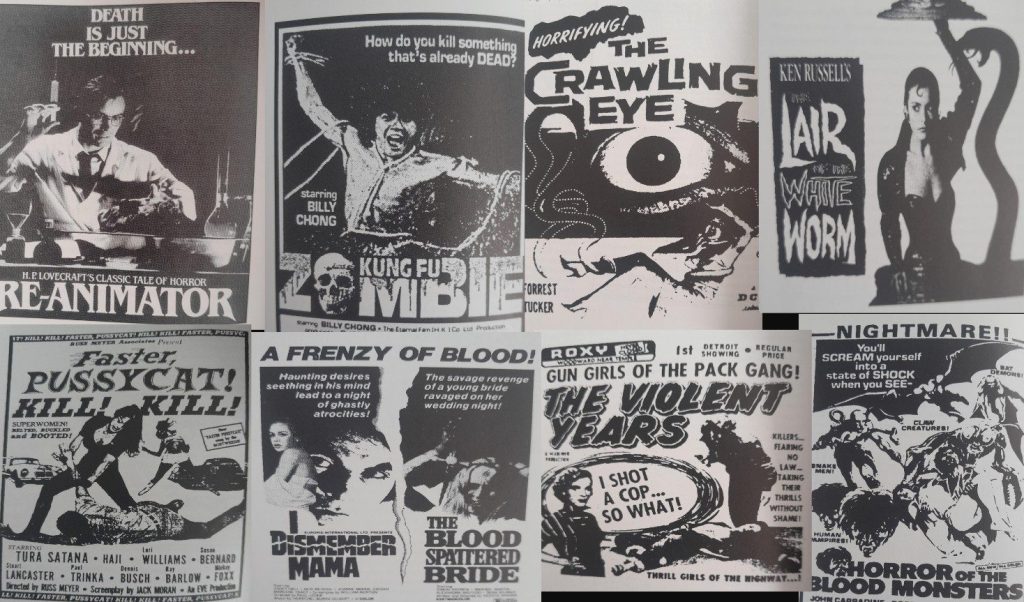
I was born in Las Cruces, in southern New Mexico, near the US-Mexico border and, perhaps more significantly, in close proximity to White Sands Missile Range, the largest military base in the United States. My parents were Eastern European Jewish immigrants who attended a state university and somehow landed — like UFOs — in the middle of “nowhere.” But they were quickly embraced by a loving, radical hippie community: People who made experimental films, took drugs in the desert, and generally avoided or provoked the military complex.
My early years were about absorption — soaking in the atmosphere, the ideologies, and a whole host of political and cultural contradictions. Some of them were metaphorically toxic, but others were literal — the land was scarred by atomic tests, literally soaked in radiation. I think growing up there was about internalising two powerful, overlapping imaginaries that still wound the region — the myth of the frontier and the legacy of the atomic bomb.
New Mexico is also one of the most diverse and spiritually layered places in the United States. It is home to many indigenous peoples: the Pueblo people (Laguna, Acoma, Taos, San Ildefonso), as well as Navajo (Diné), and Apache communities (among others); but their presence and conditions of belonging are often distorted or violently distorted by dominant settler-coloniser narratives shaped by education and the media. I, too, have absorbed many of these myths — especially through popular culture: the nobility of the cowboy, the “savageness” of the Indian, the idea of the desert as an empty space (which is not true! It is a vibrant ecology!) waiting to be settled and developed.