Design That Draws Inspiration From Nature. Biomimetics & Design

Education at design schools often begins with an in-depth analysis of natural products. Future designers are led to perceive the shapes, materials, logic, and structure of natural elements; they study plants, fruits, bones, minerals, and other “natural products.” Initially, these forms are perceived as common, ubiquitous and actually invisible. Only a deeper, structural analysis reveals to designers the functional and aesthetic perfection of what they hold in their hands, drawings or models. Subsequently, they face the challenge of how to simplify or aesthetically re-evaluate natural forms for the artificial world. This often leads to an interesting paradox: although new solutions take on a modern form, they usually lose the essential logic and functionality of the natural model.
Nature, on the contrary, always chooses and uses only the most effective solutions. Never, in its processes, is there a waste of useless matter. The processes of creation, change, growth, self-regulation and recycling are brought to evolutionary perfection. This process is verified by millions of functional patterns, replications, and actions, making it an inexhaustible source of inspiration for scientists and artists alike. One needs only to recall the detailed and visionary analyses of the mechanics and construction of natural structures by Leonardo da Vinci. The perception of natural aesthetics, logic, and meaning is key knowledge that must be constantly studied and further developed. For this reason, the inspiring approach is based on the principles of biomimetics — a kind of intelligent “naturalisation” of our artificial world. It represents a tool for finding the necessary balance between human creativity and the surrounding world. Biomimetic procedures, which emulate mechanisms, functions, and strategies from nature, demonstrate a high level of applicability in the development of new-generation products.
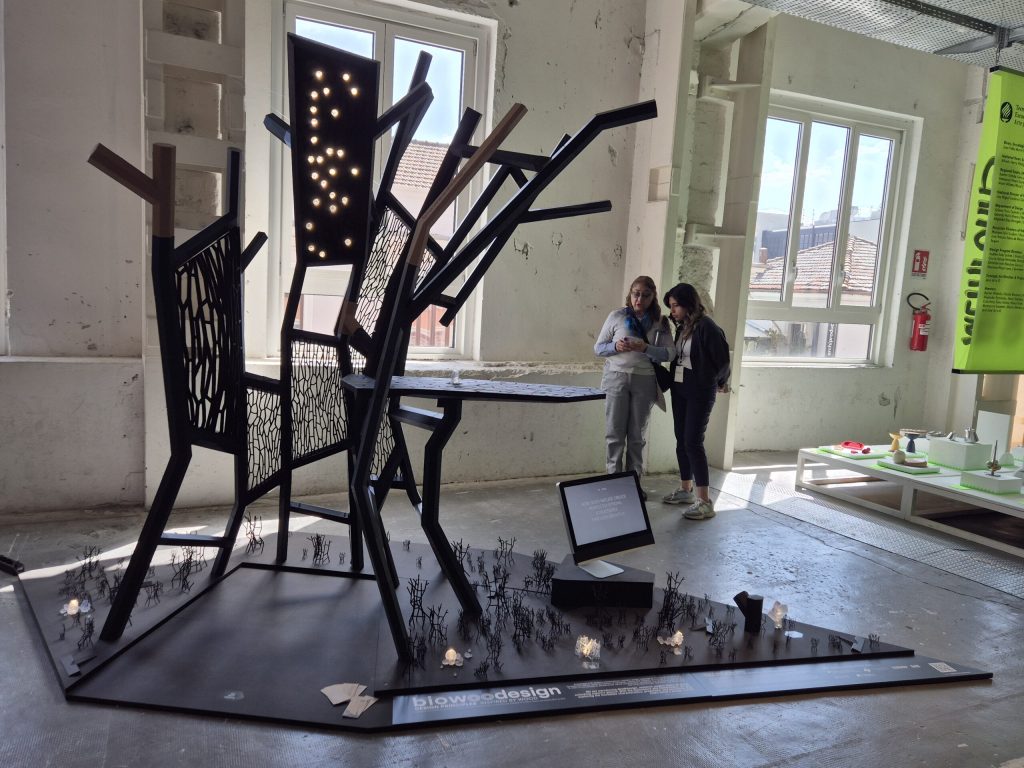
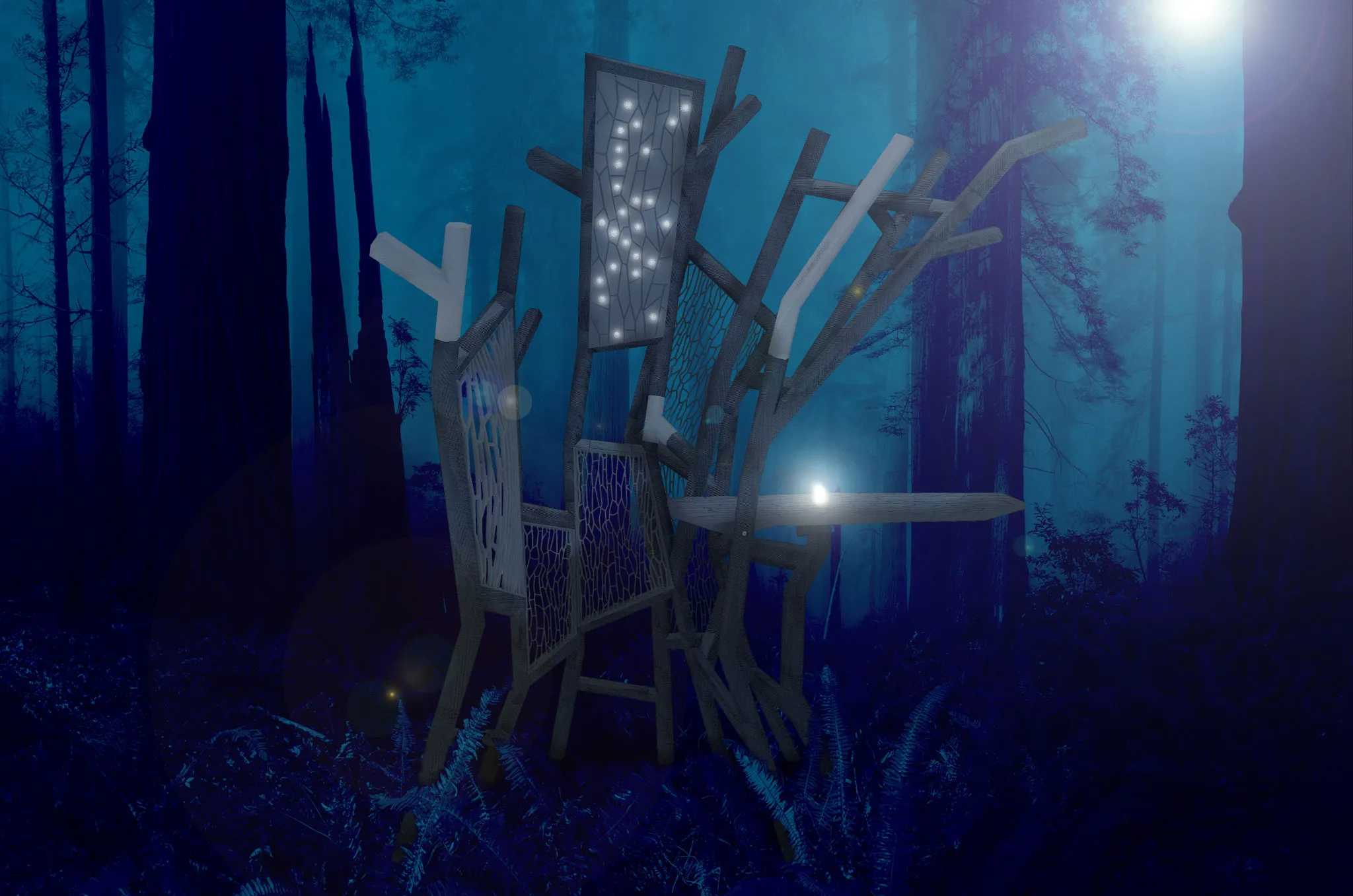
In April 2025, designers from the Technical University of Zvolen presented a new stage of their longterm research project, bioWdesign, during Milan Design Week at BASE, titled “Like a Tree in the Wind.” It focuses on interdisciplinary research into the use and transfer of biomimetic mechanisms of wood to design new forms and properties for furniture, interiors, and housing. The current phase of their project is located at the intersection of art, science and biomimetics. This stage of project development is intended to move the research team towards the final design solution ahead. The planned final output of the project is to bring scientific and artistic forms closer to real furniture production practice. Products with the potential for industrial production will be developed for the office environment, drawing on nature as a perfect creator and optimiser.
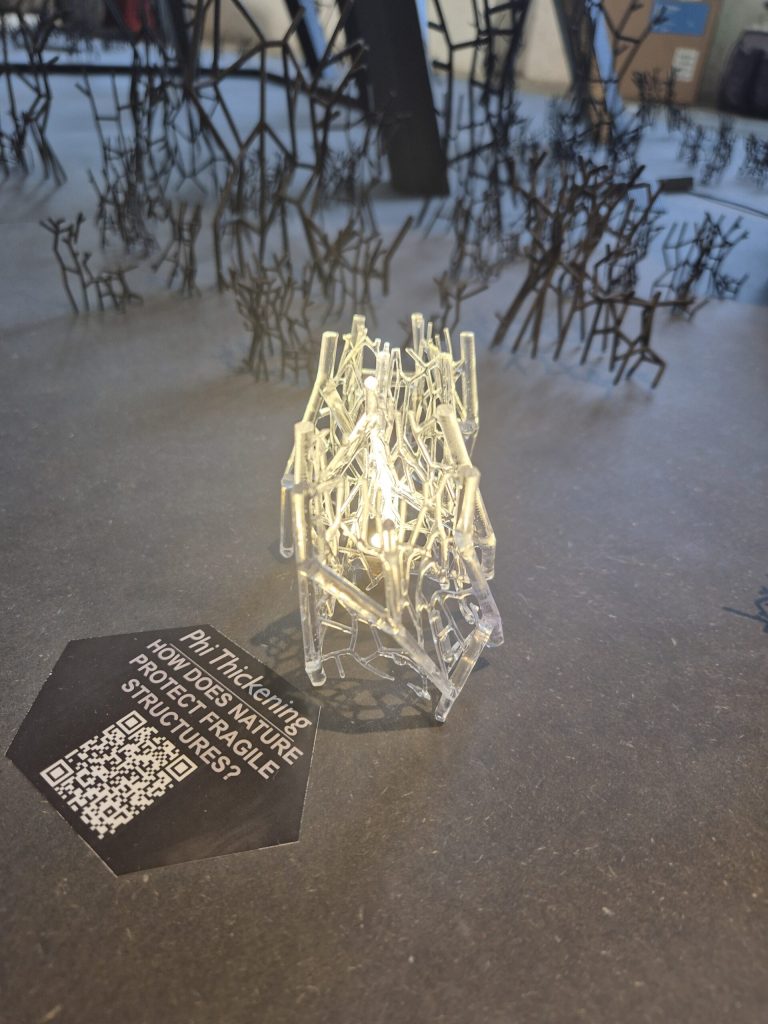
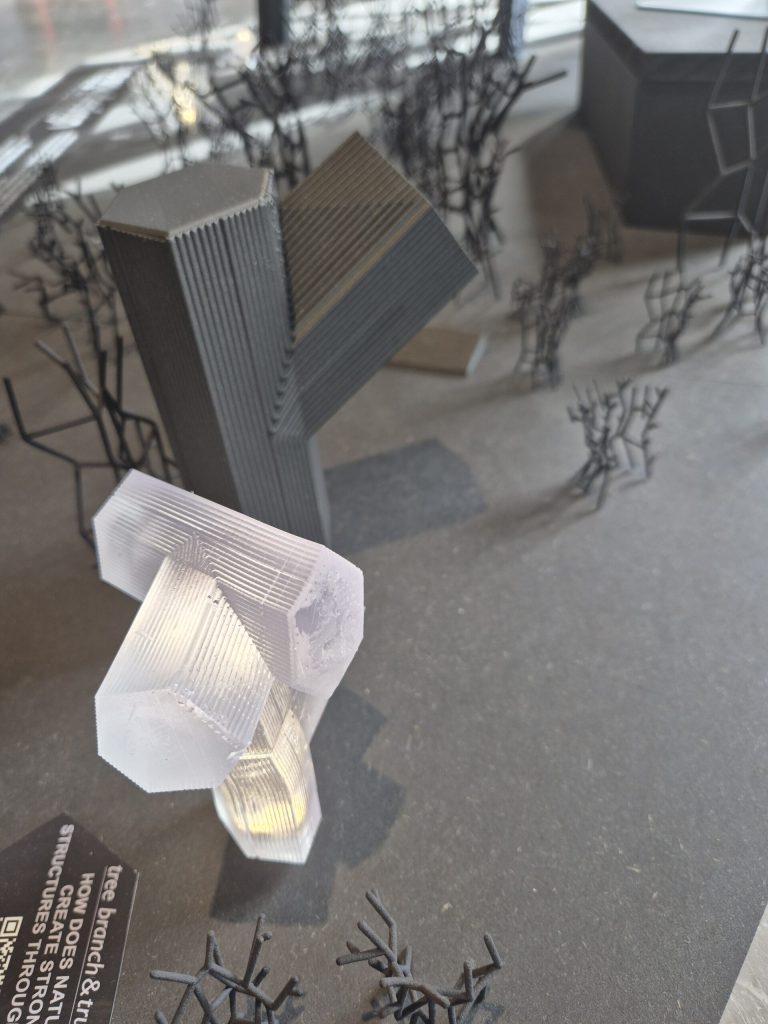
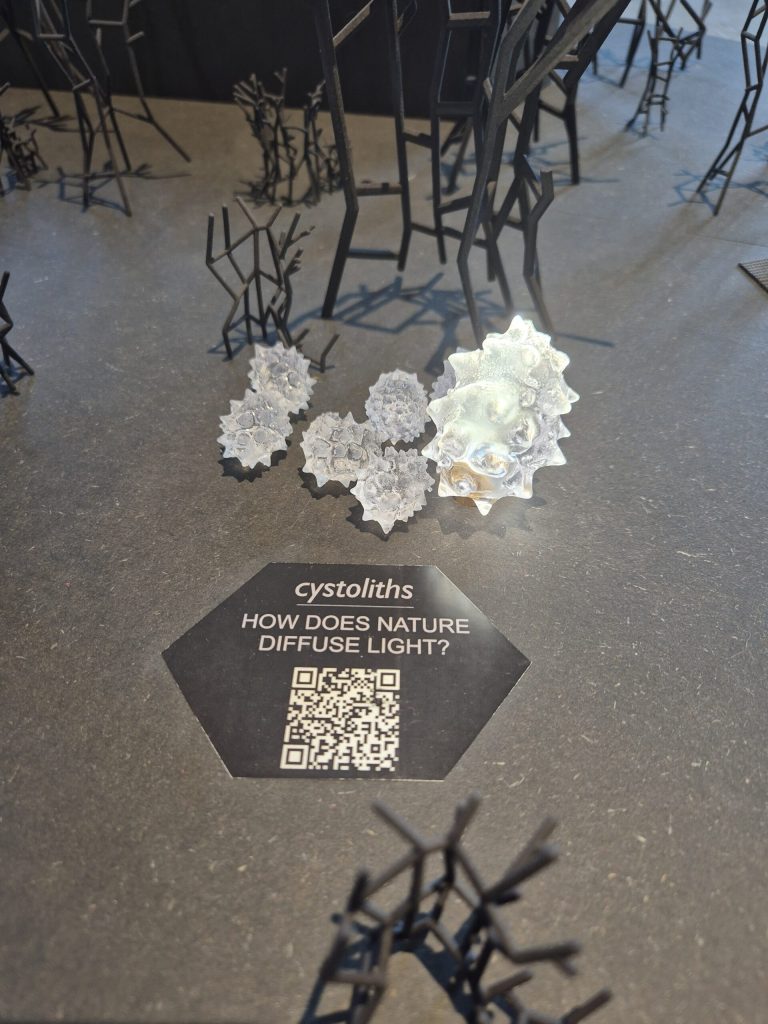
The design process began in 2024, following the previous scientific and research phase of the project, bioWdesign, by selecting three applicable biomimetic mechanisms related to wood and lignocellulosic organisms. From these, data were subsequently derived for digitisation and modelling to create the basis for 3D printing, CAD and CAM prototyping, and subsequent testing of samples as key materials, structures, forms, and design principles for future products. The research resulted in three new technical solutions in 2024, the application of which in the design creation of the office environment became the main leitmotif of applied research and two exhibition presentations in 2025.