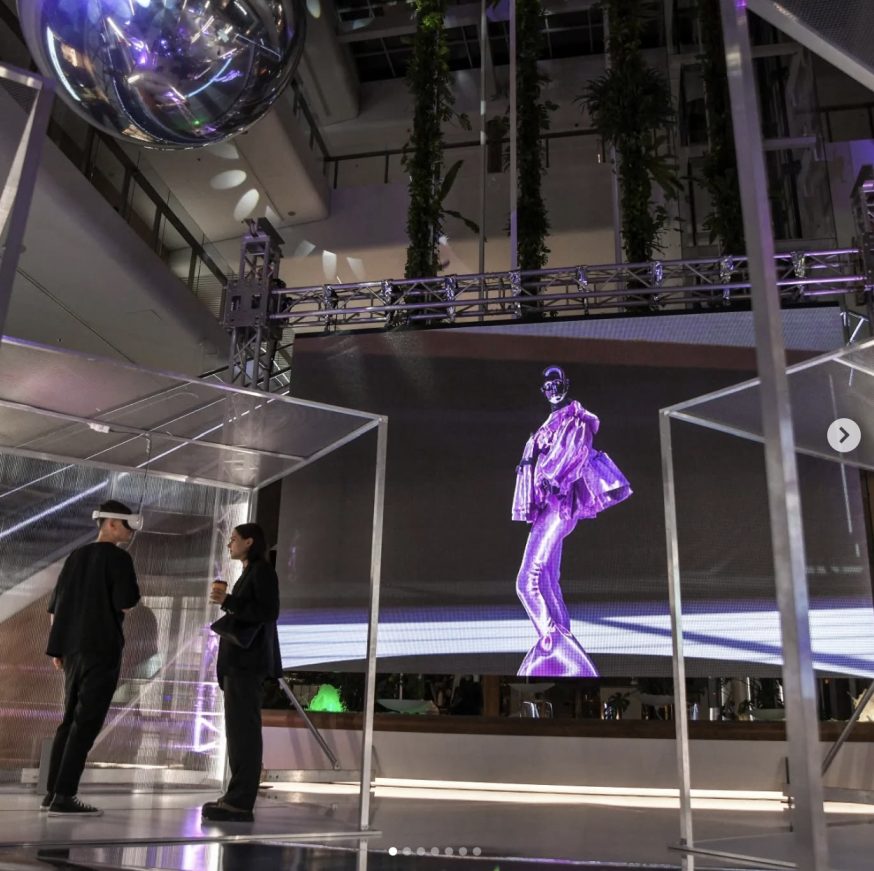
When Fashion Meets Algorithm

Digital technologies have the potential to fundamentally change the fashion industry for the better — if we can get used to them and use them consciously. One of the most radical changes they bring is the shift from a purely physical product to digital models. These algorithms enable production based on real demand, virtual shows, and 3D models. The way brands communicate with customers is also changing significantly.
Some large fashion houses and fast-fashion brands already routinely use augmented reality in their own applications. Customers can see themselves in selected outfits on the screen, combine them as they wish, and decide which to buy directly in the application. Such an approach significantly reduces the number of returned items, which often end up as waste. A platform for fully implementing these intersections of physical and digital fashion is the digital product passport as well. According to European legislation, this becomes mandatory for every product and can also serve as a ticket to a brand’s extended digital world. This way, a consumer owns not only the product but also the entire ecosystem of information, stories, and possibilities for further use.

An important aspect of this transformation is digital aesthetics, which is significantly influenced by the emergence of artificial intelligence as a tool for generative design. It is a system that connects emotions, data and visual identity and can quickly test aesthetic concepts without the need for physical production.
Interestingly, the fashion industry — although it is one of the most progressive industries, capable of absorbing trends and social changes before they fully manifest — is still a step behind in digital technologies compared to other sectors. The pandemic has accelerated the broader adoption of augmented reality and digital tools in fashion. Since 2021, the number of professional publications dedicated to fashion in the metaverse has also increased significantly.
Technology is thus redefining the fashion system, and artificial intelligence is becoming another tool that we are still learning to use. To prevent it from taking over, it is important to guide it and use its positive potential. For this reason, a new generation of designers is emerging; they are data-savvy, understand visual culture and digital tools, but they also possess a sense of silhouette, material, and physical construction of clothing. The designer of the future is becoming a hybrid creator.