Zuzana Šebeková – EVOLVING TEXTILE PRINTS_

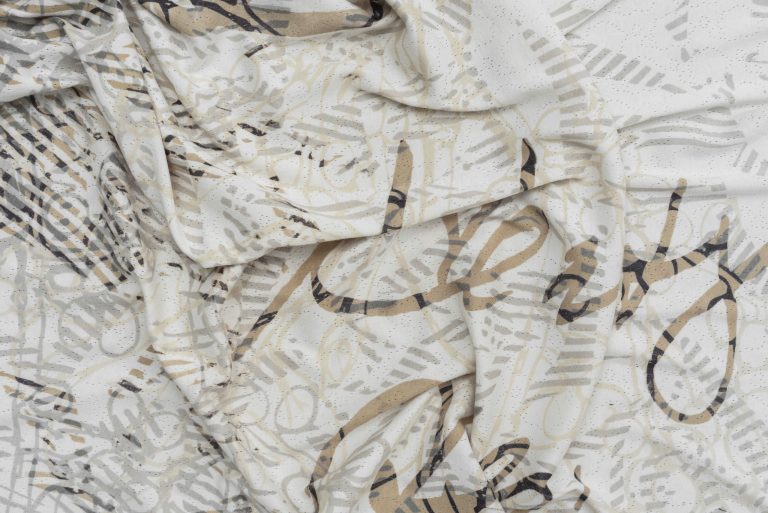
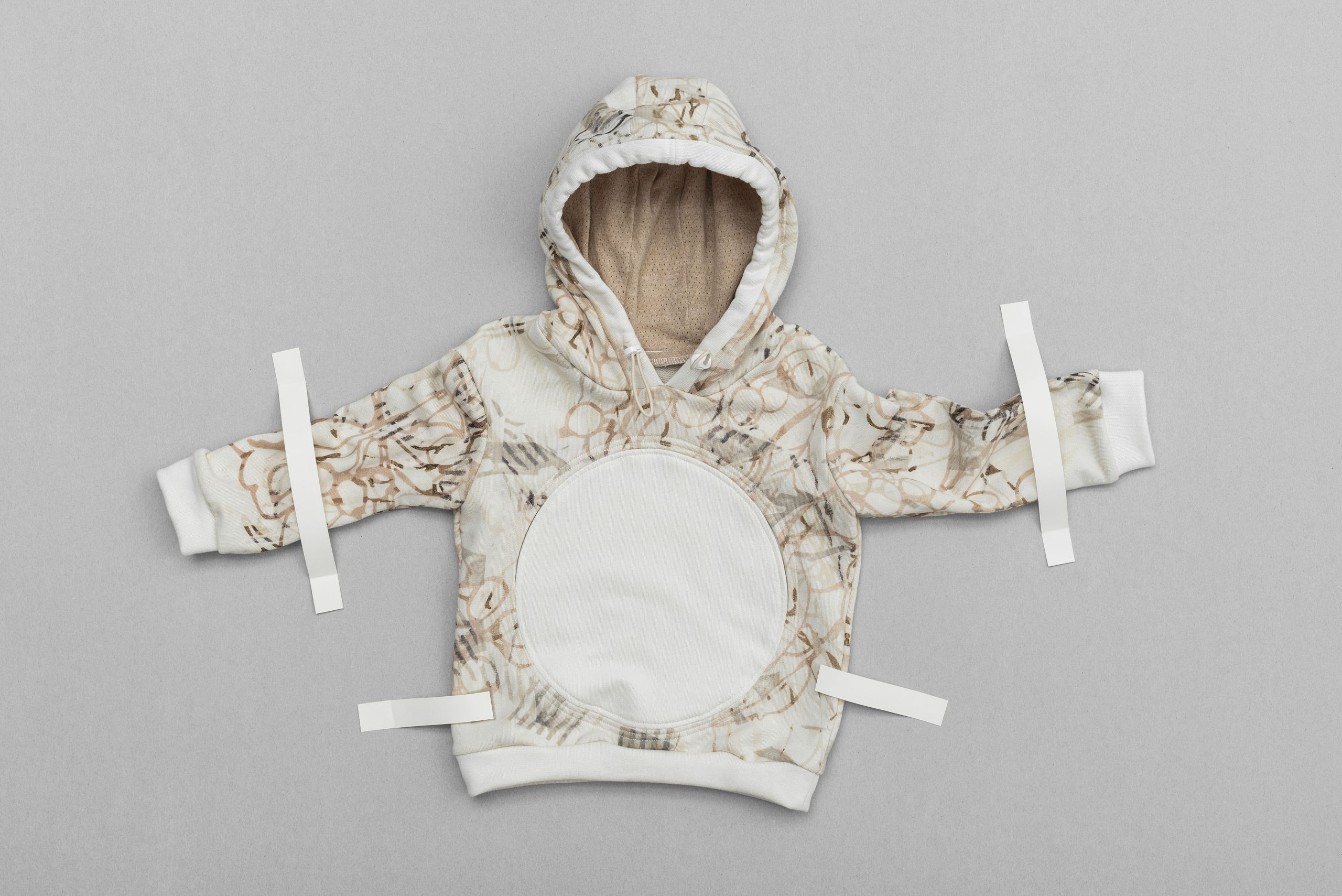
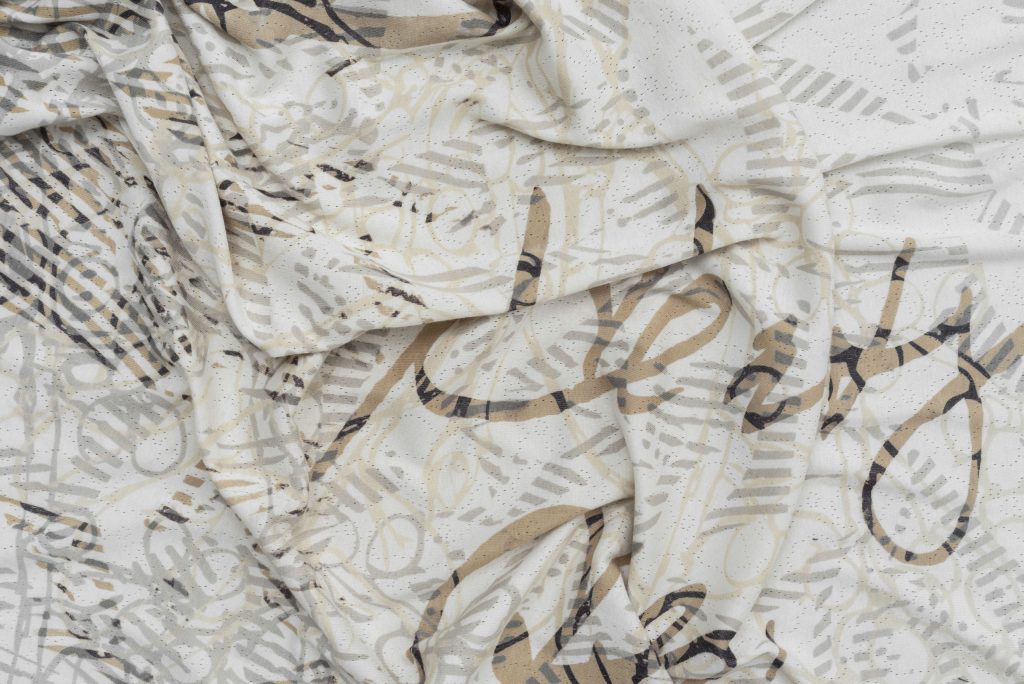
Textile design is a medium that is relatively rarely reflected upon in contemporary discussions. Even if it does become a subject of interest, attention is usually focused on visual and technical aspects. The description of printing, patterning or technological processes that led to the creation of the design itself usually comes to the fore. However, there are significantly more ways to contemplate textile design. Its analysis may raise questions about process, relationship to the material, time, or environmental contexts. In the following text, I aim to outline just such an approach — to ponder textile design as a space for interpretation and exploration. As a starting point, I chose Zuzana Šebeková’s work, specifically two pieces created over the last three years. They may represent an important contribution to the discussion of contemporary textile design and its overlaps with experimentation, process, and conceptual thinking. EVOLVING PRINTS_03 is a collection of original- printed fabrics created in 2023. The second is TRANSFORMATIVE BIO-DYE METAMORPHOSIS, which was recently presented at Bratislava Design Week 2025.
Textile design is a medium that is relatively rarely reflected upon in contemporary discussions. Even if it does become a subject of interest, attention is usually focused on visual and technical aspects. The description of printing, patterning or technological processes that led to the creation of the design itself usually comes to the fore. However, there are significantly more ways to contemplate textile design. Its analysis may raise questions about process, relationship to the material, time, or environmental contexts. In the following text, I aim to outline just such an approach — to ponder textile design as a space for interpretation and exploration. As a starting point, I chose Zuzana Šebeková’s work, specifically two pieces created over the last three years. They may represent an important contribution to the discussion of contemporary textile design and its overlaps with experimentation, process, and conceptual thinking. EVOLVING PRINTS_03 is a collection of original- printed fabrics created in 2023. The second is TRANSFORMATIVE BIO-DYE METAMORPHOSIS, which was recently presented at Bratislava Design Week 2025.
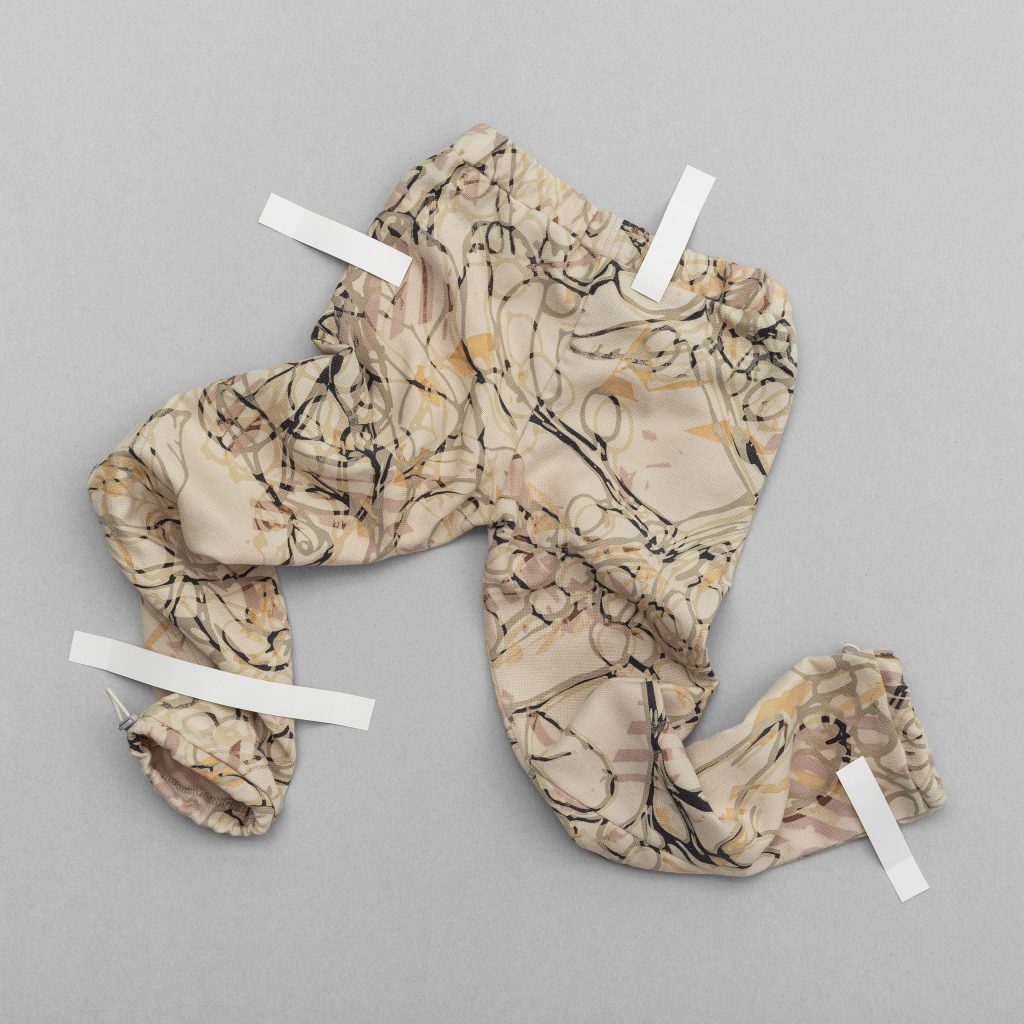
The text includes two layers. Inspired by the collections just presented, I decided to approach the analysis of her work in this way. The author layers colour emulsions derived from natural sources onto textiles using the screen-printing technique. In my case, I tried to interconnect two layers of text. The first is an analysis of the presented collection. The second layer could serve as extended footnotes. In these parts, I offer a richer view of selected topics related to thinking about textile design and the presented collections. My intention with the two layers is to provide the reader with more intense stimuli for thinking about the presented collections. Let’s first stop at what the analysis of the selected collections may offer us. For art school students in particular, reflecting on the work of textile designers can be beneficial for their own work and thinking about it. Reflection on a work of art is a systematic investigation aimed at understanding the structure, meaning and effect of the work being analysed. It is not just a description, although that is an important part. Through analysis, we delve deeper into how the work communicates, what it evokes, and why it is significant in a given cultural or historical context. From the perspective of aesthetics and philosophy, analysis is not just a tool for intellectual interpretation; it is an act of co-creation of meaning. The viewer is not just a passive receiver, but we invite them to become an active interpreter. The philosopher Hans-Georg Gadamer reminds us that understanding is an event that takes place between the viewer and the work at a specific time. So analysis is not just about the work, it is also about us. The analysis of a work of art plays a significant role in shaping the viewer’s aesthetic perception. It represents a process that deepens his aesthetic experience in contrast to the intuitive or affective reception of art, which is an essential part of the initial contact with the work. An analytical approach allows the viewer to understand layers of meaning that go beyond the immediate visual experience.